ServicesWhole-Home Filtration
Whole-Home Water Filtration in Allen
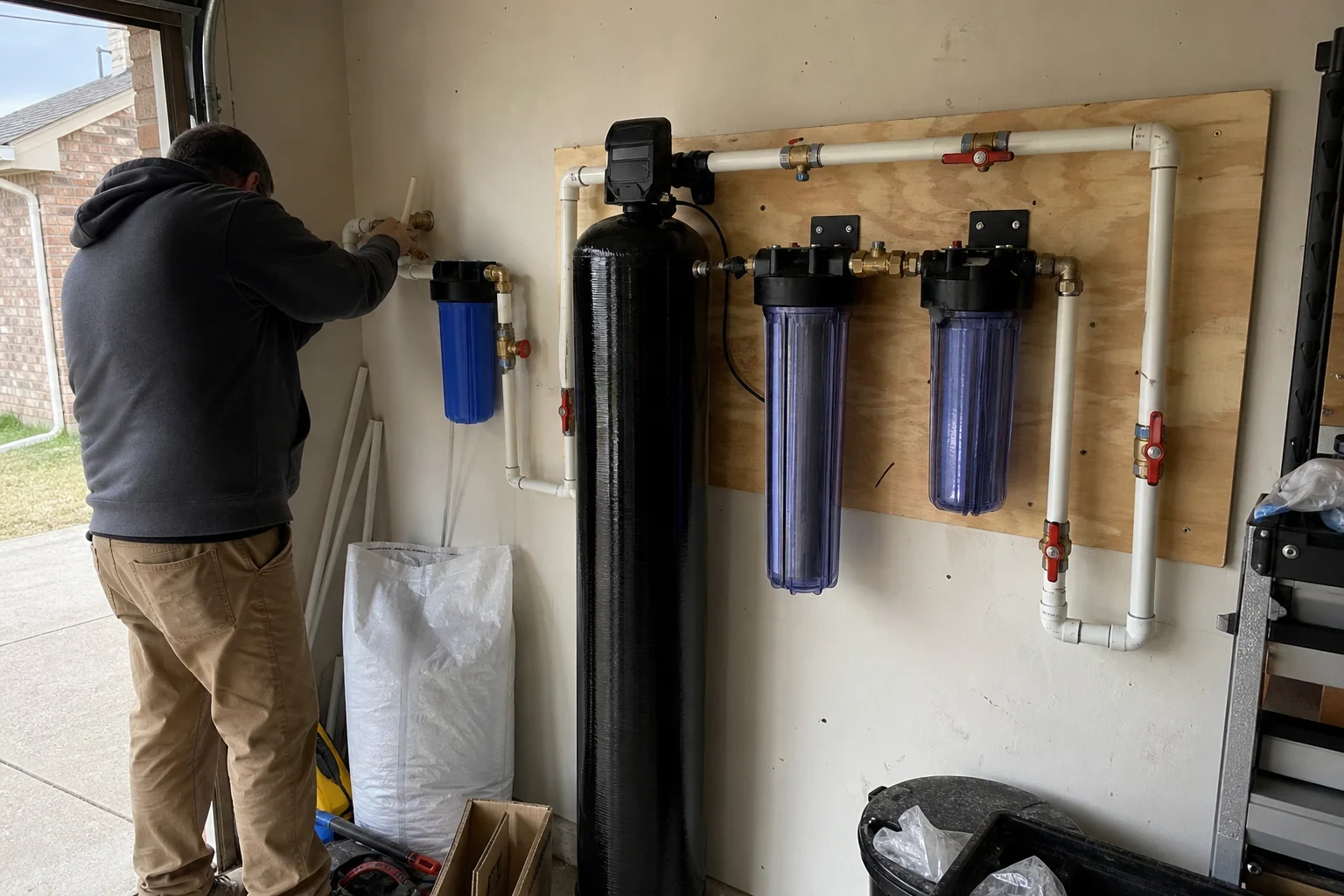
We install a point-of-entry filter on your main line, so the kitchen, showers, laundry and water heater all get treated water. The system is sized to your household's flow rate and your water test results, and the same small crew handles it from the first visit to the final check.
What a Whole-Home System Does
A whole-home filter sits where the water line enters your home, before it splits off to the water heater and the fixtures. Water passes first through a sediment stage that catches sand, rust flakes and grit, then through a bed of activated carbon. The carbon holds chlorine compounds and many organic chemicals on its surface through adsorption, which is what takes away the pool smell in the shower and the flat taste at the sink.
Municipal water is treated to be safe, and a filter does not change that. What it changes is taste, smell and the residue disinfectants leave behind on skin, hair and rubber parts like faucet washers and toilet flappers. If your main goal is drinking water only, a reverse osmosis unit under the sink may fit better. Many homes end up with both.
We keep the same two or three people on your job from start to finish, so the person who reads your water test is the one who sizes the tank and connects it.
What the Installation Includes
Sediment prefilter
A cartridge stage ahead of the carbon traps particles that would otherwise clog the carbon bed and shorten its life.
Catalytic or standard carbon, matched to your water
Standard activated carbon handles free chlorine well. Chloramine breaks down slowly on ordinary carbon, so where your report shows it, we use catalytic carbon, which has a surface treated to speed that reaction.
Tank sized by flow, not by guesswork
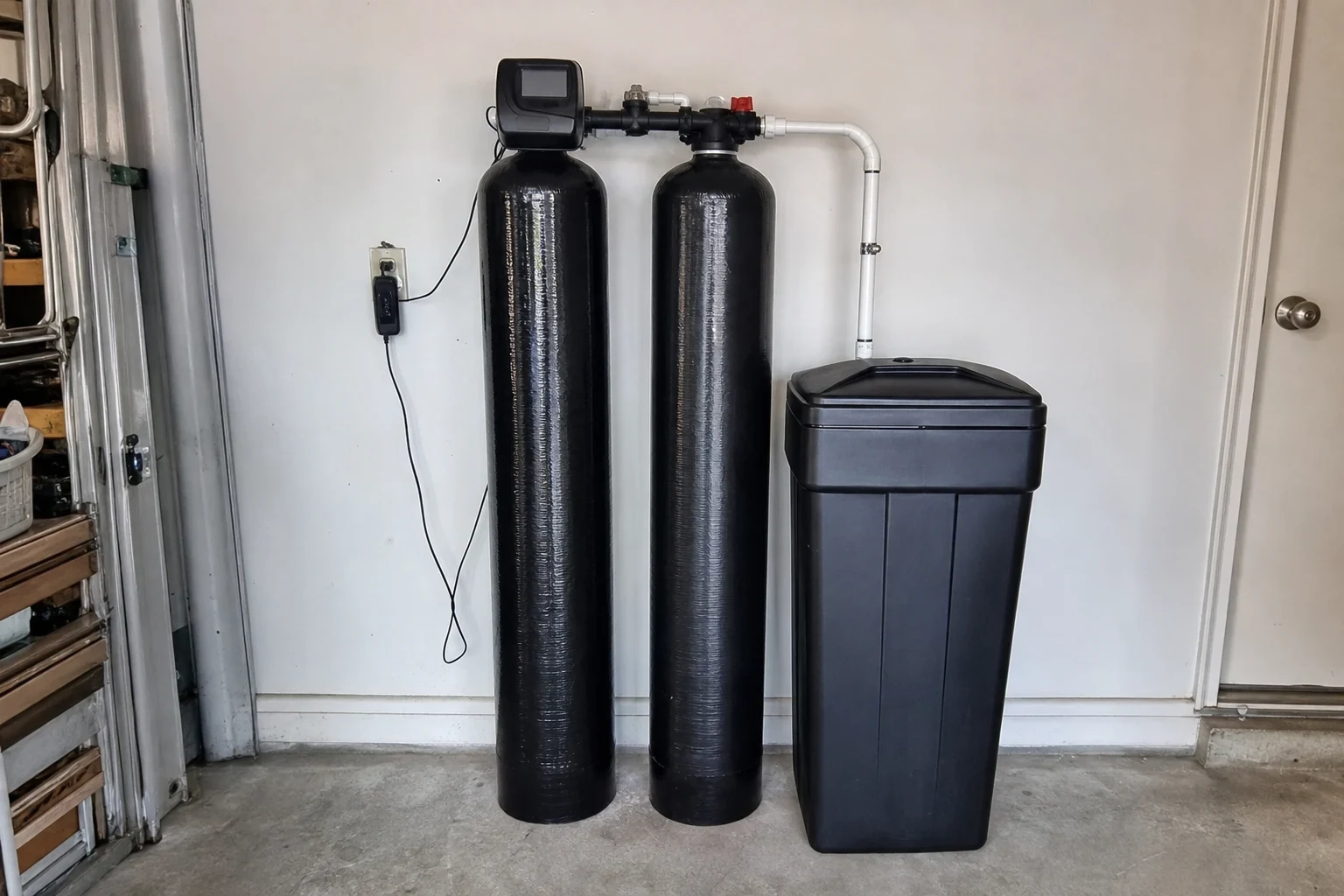
Carbon needs contact time to work. We size the tank to your peak flow in gallons per minute, so two showers and the washer running together still get filtered water without a noticeable pressure drop.
Bypass valve and shutoffs
Every system gets a three-valve bypass. You can isolate the filter for service while water still runs to the house.
Clean connection and cleanup
We cut into the main line with fittings rated for potable water, pressure-test the joints and flush the new media until the water runs clear. Packaging and old pipe leave with us.
Signs Your Home Could Use Whole-Home Filtration
Pool odor after every shower
Steam carries chlorine out of hot water and into the bathroom air. A kitchen filter never touches that water, but a system on the main line treats it before it reaches the water heater.
Dry skin or brittle hair
Many people notice softer-feeling skin once chlorine is out of the bath water. It is a comfort issue, not a health claim, but it is one of the most common reasons people call us.
A drawer full of replacement cartridges
A fridge filter, a countertop pitcher and a shower-head filter each clean water at a single outlet, and each needs its own refills. One system at the main line can take over that work for the whole house.
Faucet aerators full of grit
Sand or rust in aerators and appliance inlet screens points to sediment reaching your fixtures. The prefilter stage catches it upstream.
Rubber parts wearing out early
Disinfectants slowly harden rubber seals. Flappers and washer gaskets that crack quickly can be a sign worth testing for.
How Your Install Day Runs
- 1
Water test and walkthrough
We test your water at the kitchen tap and look at where the main line enters, usually in the garage, a utility closet or outside near a hose bib. We note pipe material and size, and check for a drain we can use if the system needs one.
- 2
Written recommendation
You get a plain explanation of what the test showed, which media we suggest and why, and a line-by-line quote. If carbon filtration will not solve what you are seeing, we tell you that.
- 3
Installation
On install day the same crew shuts off the water, cuts in the bypass and the tank, and pressure-tests each joint. Most homes are without water for a few hours, not the whole day.
- 4
Flush and handoff
We flush carbon fines out of the new bed, recheck your water and show you the bypass, the prefilter housing and when each part needs changing.
What Affects the Price
Whole-home filtration is priced by the equipment your water needs and the work it takes to connect it. We quote it line by line after the water test, so you see what each part costs before anything is installed. Standard professional installation is included for qualifying homes.
- Carbon type and volume
- Catalytic carbon costs more than standard carbon, and a larger home with more bathrooms needs more media to keep enough contact time.
- Cartridge or backwashing tank
- Simple cartridge systems cost less up front but need frequent changes. A backwashing tank with a control head costs more and needs a drain, but the media lasts years.
- Location of your main line
- When the line comes in along an open garage wall, the connection goes quickly. A line tucked into a tight closet, hidden behind drywall, or outdoors where the system needs a weather enclosure adds labor and parts.
- Pipe material and size
- Copper, PEX and CPVC each take different fittings, and a larger main needs larger valves.
Common Questions About Whole-Home Systems
Something not covered here? (972) 945-9687
Does a whole-home filter cut water pressure?
When it's sized properly, you shouldn't feel any drop. Pressure falls when a cartridge or tank is too small for the water moving through it, so we size by your peak gallons per minute instead of the home's square footage.
When does the media need replacing?
It hinges on how many gallons your household uses a day and what media the system holds. The sediment cartridges ahead of the carbon are usually changed every few months, while the carbon bed in a backwashing tank lasts much longer. Once we see your real usage, we give you a replacement schedule for your system.
Will carbon filtration soften the water?
No. Carbon cuts chlorine, chloramine and many organic compounds, but the calcium and magnesium behind scale pass right through. If the test shows hardness worth dealing with, we'll discuss a water softener as its own stage.
Does it protect against bacteria?
Carbon doesn't disinfect, and city water arrives already disinfected. If you'd like an extra barrier against microorganisms, UV water treatment can go in after the filter.
Who comes to do the install?
The same small crew that handled your water test and walkthrough. Nobody new shows up on install day, and the person who hooked up your system is the one you talk to with questions later.
Find Out What Your Water Needs
Start with a water test and a written report, then we explain whether a whole-home system makes sense for your home. We work in Allen and nearby towns like Plano, McKinney and Fairview.