ServicesWater Softeners
Water Softeners in Allen, Sized to Your Hardness Reading
A softener only earns its place when your water carries enough calcium and magnesium to scale your water heater, fixtures and glass shower doors. We measure your hardness first, size the resin tank to match, and the same crew handles the install and the first regeneration.
What a Softener Does and When It Makes Sense
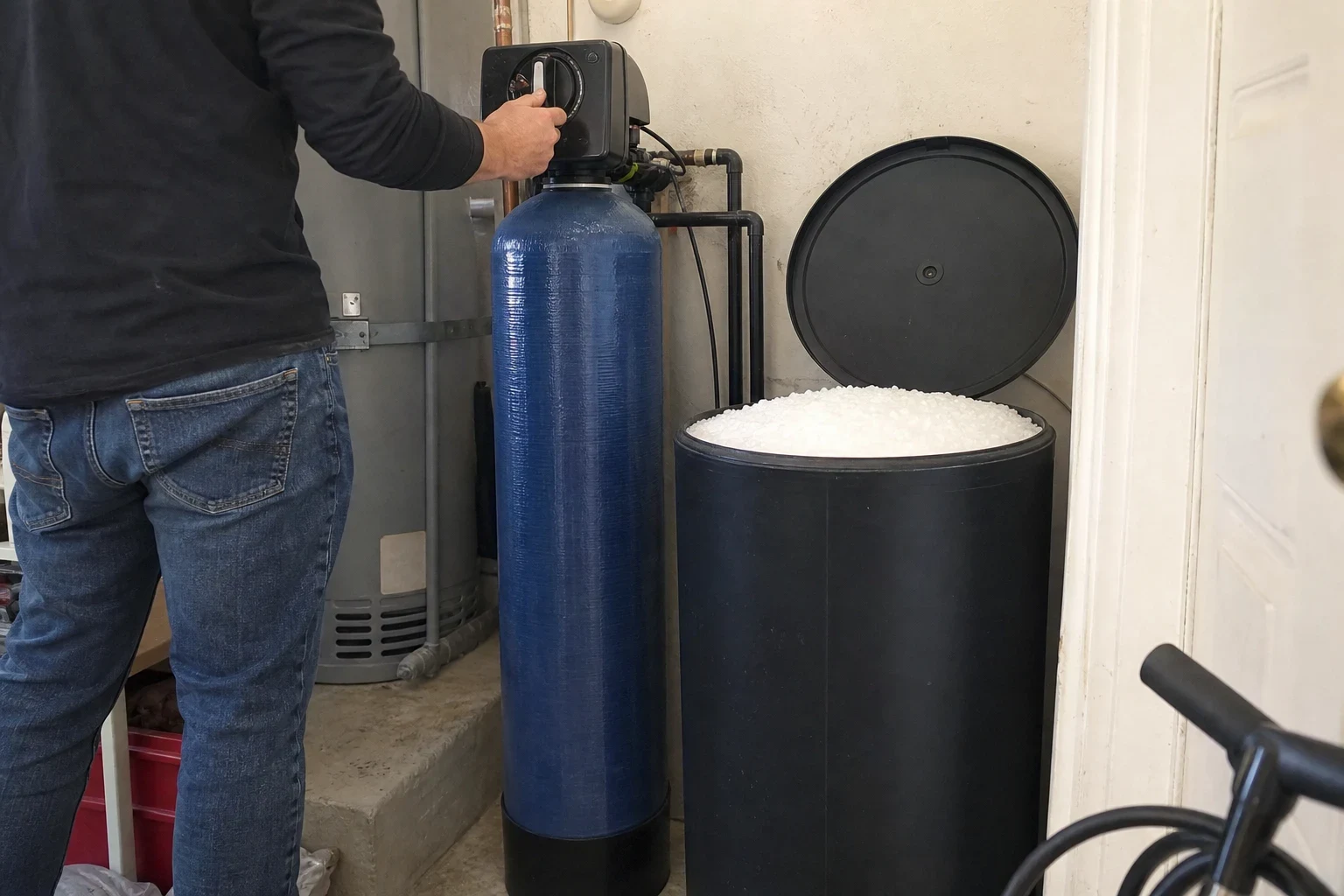
A water softener is an ion-exchange system. Inside the mineral tank sits a bed of small resin beads, each carrying a charge of sodium or potassium. As hard water passes over that bed, the beads grab calcium and magnesium and release their sodium or potassium in trade, so the water leaving the tank no longer forms scale. Once the beads are loaded with minerals, the control valve starts a regeneration cycle that flushes them with brine from the salt tank and sends the hardness down the drain.
Softening fixes scale. It does not remove chlorine taste, sediment or most other contaminants. If taste or odor is your main complaint, whole-home filtration is usually the better first step, and some homes end up with both. That is why we read your hardness in grains per gallon before we recommend anything. When the reading comes back modest, we say so plainly and suggest you keep your money for something that will make a real difference.
Our crew is small on purpose. The person who tests your water is part of the team that sizes the system and installs it, so nothing gets lost between the first visit and the finished job.
What Your Softener Installation Includes
- 01
Hardness reading and sizing
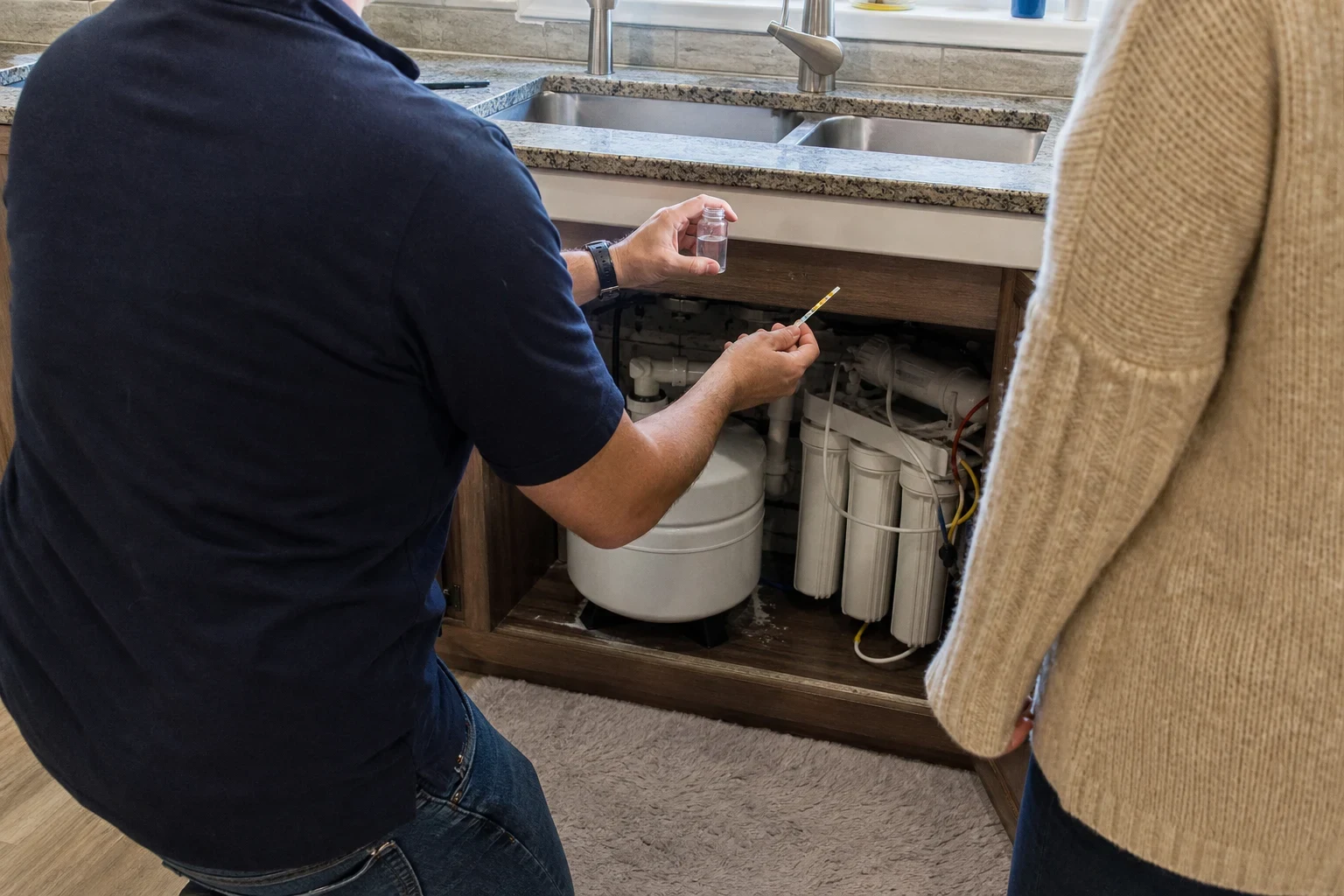
We measure hardness at a tap in your home and ask how many people live there. Those two numbers set the grain capacity of the resin tank, so the unit regenerates efficiently instead of too often or not enough.
- 02
Metered control valve
We favor demand-initiated valves that count gallons and regenerate only when the resin is close to spent. A timer-only valve regenerates on a schedule whether you used the water or not, wasting salt and rinse water.
- 03
Bypass valve at the tie-in
Every install gets a bypass so you can isolate the softener for service without shutting off water to the whole house. We show you which way the handles turn.
- 04
Drain line with an air gap
Regeneration water goes to a floor drain, standpipe or laundry box through an air gap, as plumbing code requires. The gap keeps drain water from ever siphoning back into the resin tank.
- 05
Programming and first regeneration
We set the hardness value, regeneration time and reserve, then run a cycle while we are there. You watch it work before we pack up, and the work area is cleaned before we go.
Questions about Water Softeners?
Call(972) 945-9687How Hard Water Shows Up in Your Home
Chalky crust on fixtures
The white buildup is calcium carbonate that stays behind when water dries. It plugs aerators and showerhead holes, and it returns a few days after you clean it.
Cloudy glasses and shower doors
A hazy film that comes off with vinegar is mineral scale, not soap residue. The harder the water, the more of it you see.
Popping or rumbling from the water heater
Heat forces minerals out of the water, and they settle into a crust on the bottom of the tank with little pockets of water trapped beneath. Those pockets boiling off make the crackling sound, and the crust blocks heat from the burner or element, so it runs longer to make the same hot water.
Soap that won't foam
Hardness minerals react with the fatty acids in soap and form a sticky scum in place of suds. You go through more shampoo and detergent, and laundry and skin can feel stiff.
An aging softener that can't keep pace
Valves break down and resin wears out. When scale and spots come back even though the tank still has salt, the unit may need fresh resin or replacing altogether.
How the Job Runs
- 1
Hardness check and conversation
We measure your hardness and find where the main line comes into the house. Many Allen homes were built with a softener connection already plumbed in the garage, and when yours has one, the tie-in is short and easy.
- 2
Sizing and quote in writing
Before you make a decision, you have it all on paper: our recommended grain capacity, the valve type and whatever plumbing the spot requires.
- 3
The install
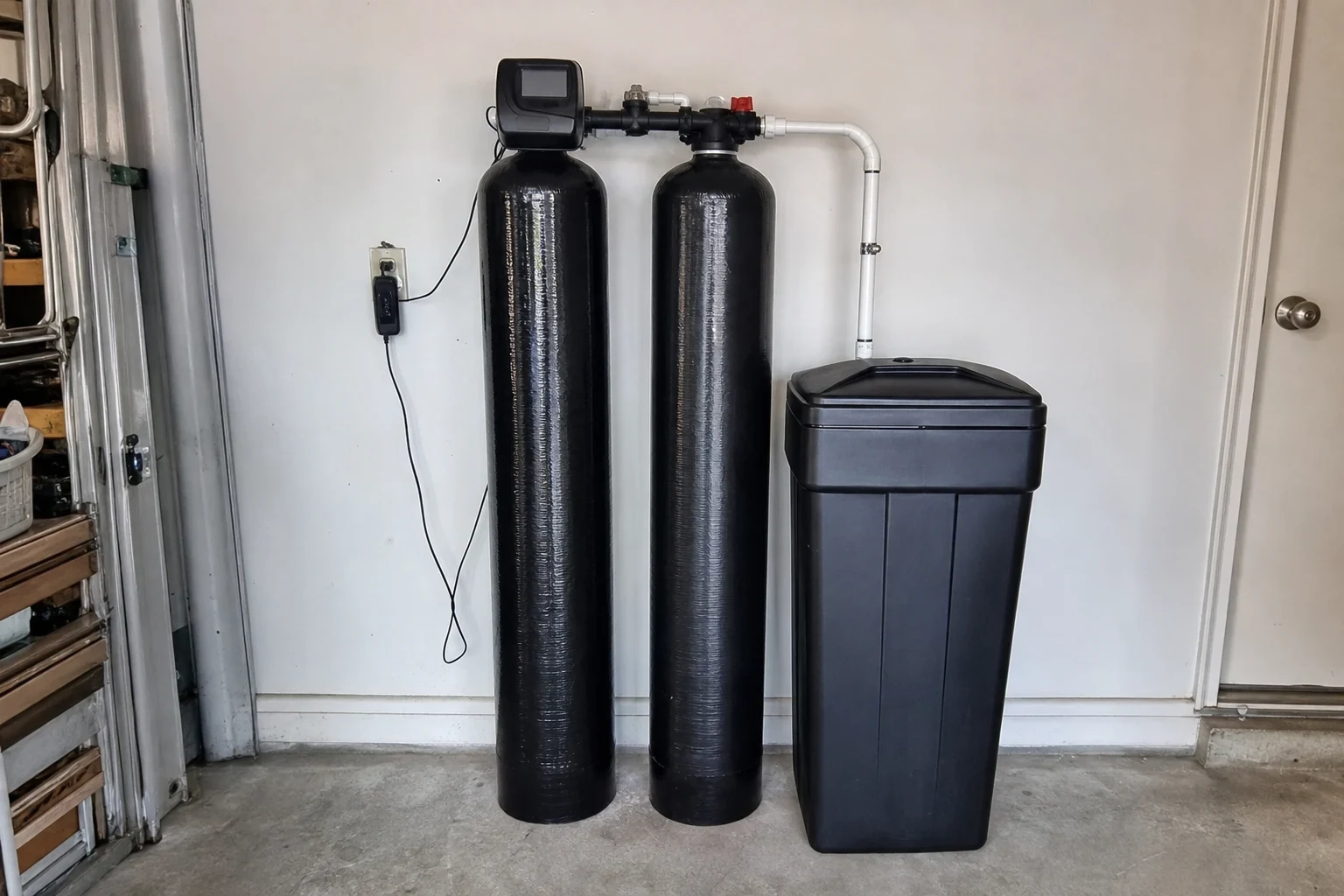
The same crew comes back, turns off the water, cuts in the bypass, places the resin and brine tanks, runs the drain line and plugs in the valve. We cover the floor around the work, and on an existing loop most installs take part of a day.
- 4
First run and handoff
We add salt to the brine tank, run the first regeneration and look for leaks. Then you learn how to add salt, read the valve display and work the bypass.
What Sets the Cost of a Softener
Three things shape your quote: the hardness of your water, how much your household uses, and what's already in place where the softener will go. Standard professional installation is included for qualifying homes, and we'll tell you while quoting whether yours qualifies. Anything extra is itemized line by line.
- Resin capacity
- Harder water and bigger households call for more resin. A larger tank has a higher upfront cost but regenerates less frequently.
- Control valve
- A metered valve is pricier than a timer valve, and it usually earns that back in saved salt and water over the years the system runs.
- Loop in place or new pipe
- With a softener loop and an outlet nearby, the connection is short. If there's no loop, we run new pipe from the main line, which means more labor and materials.
- Getting to a drain
- A nearby floor drain or laundry standpipe keeps the job simple. A long run to a drain, or no usable drain at all, means extra work.
Water Softener Questions
Do I need a softener if my water is only slightly hard?
Often not. At low hardness the scale is minor and a softener adds salt and maintenance you may not need. We give you the reading and an honest answer, and sometimes that answer is no.
How often will I add salt?
It depends on hardness, water use and tank size, but most households check the brine tank monthly and top it up as needed. Keep the salt level above the water line, and break up any crust, called a salt bridge, if the level seems stuck.
Can I use potassium chloride instead of salt?
Yes. Potassium chloride works in the same valves and adds no sodium to your water. It costs more per bag, and we may set the valve to account for it.
Will softened water add sodium to my drinking water?
A small amount, which rises with hardness. If you want to avoid it, a reverse osmosis system at the kitchen sink removes most of that sodium from drinking and cooking water.
Why does softened water feel slippery?
Without calcium and magnesium, soap rinses off cleanly instead of leaving a residue. That slick feeling is your skin without the film hard water leaves, and most people get used to it within a week or two.
Does a softener replace a filter?
No. A softener targets hardness minerals only. For chlorine taste and odor, look at whole-home filtration, which can sit ahead of the softener and also protects the resin.
Find Out If a Softener Is Worth It in Your Home
We read your hardness, size the system to your household, and the same small crew sees the install through. One phone call sets up your water test and a written report on what we found.