Allen, TX
Water Filtration in Allen, Handled by One Small Crew
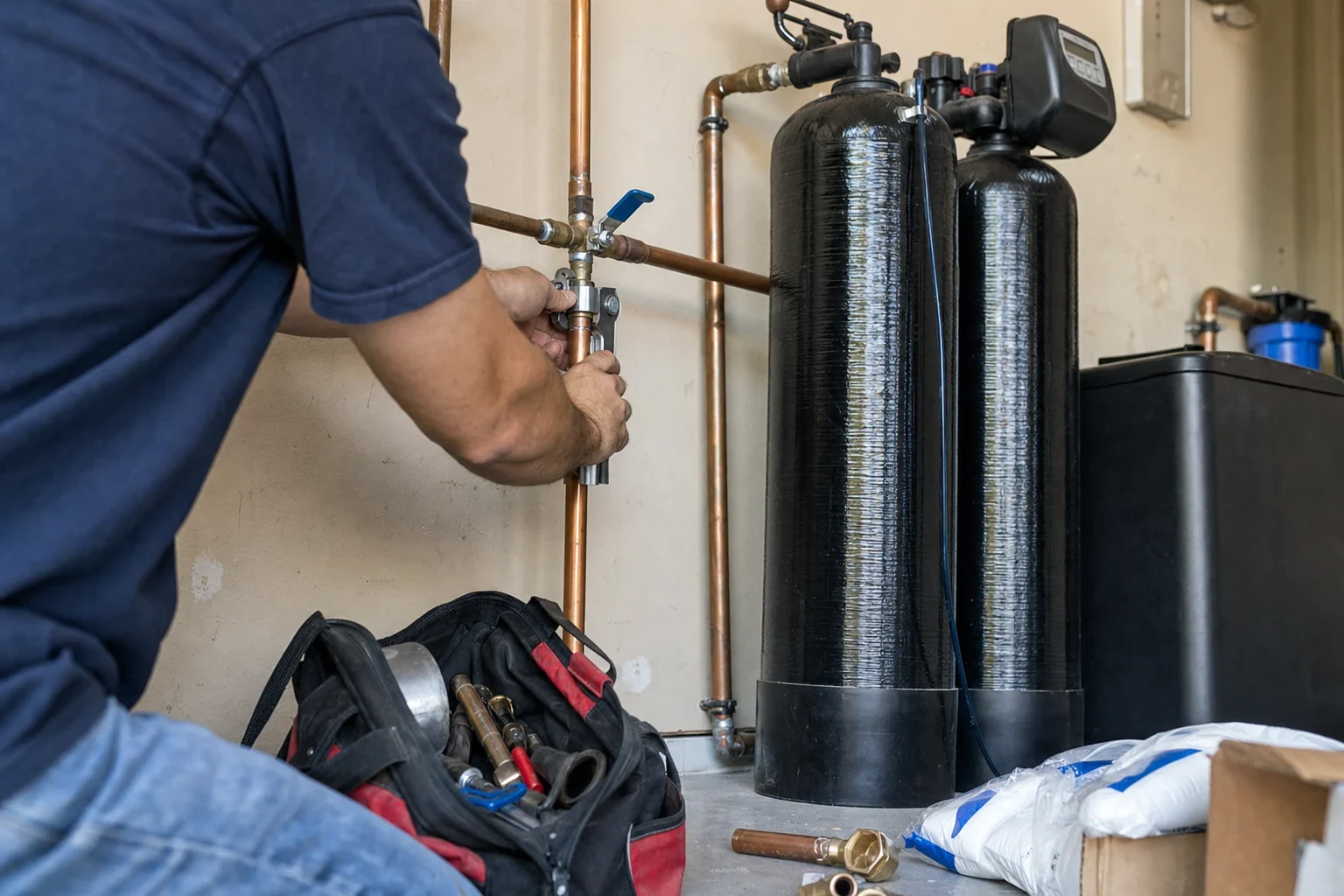
We install whole-home filtration, water softeners, under-sink reverse osmosis and UV water treatment in homes across Allen, Plano and McKinney. The person who tests your water is the person who sizes the system, plumbs it in and shows you how to change the first cartridge.
- Same crew start to finish
- Line-item written quote
- Every part explained
- Cleanup before we leave
Filtration Systems We Install
We work on four kinds of equipment, and each one solves a different problem. Whole-home filtration uses carbon media at the main line to take out disinfectant taste and odor at every tap. Water softeners swap calcium and magnesium for sodium in a resin bed so scale stops building on fixtures and inside your water heater, while reverse osmosis pushes drinking water through a membrane at one sink and UV water treatment passes it under a lamp as a final barrier against microorganisms. We'll tell you which ones your water actually calls for, and which ones it doesn't.
Whole-Home Filtration
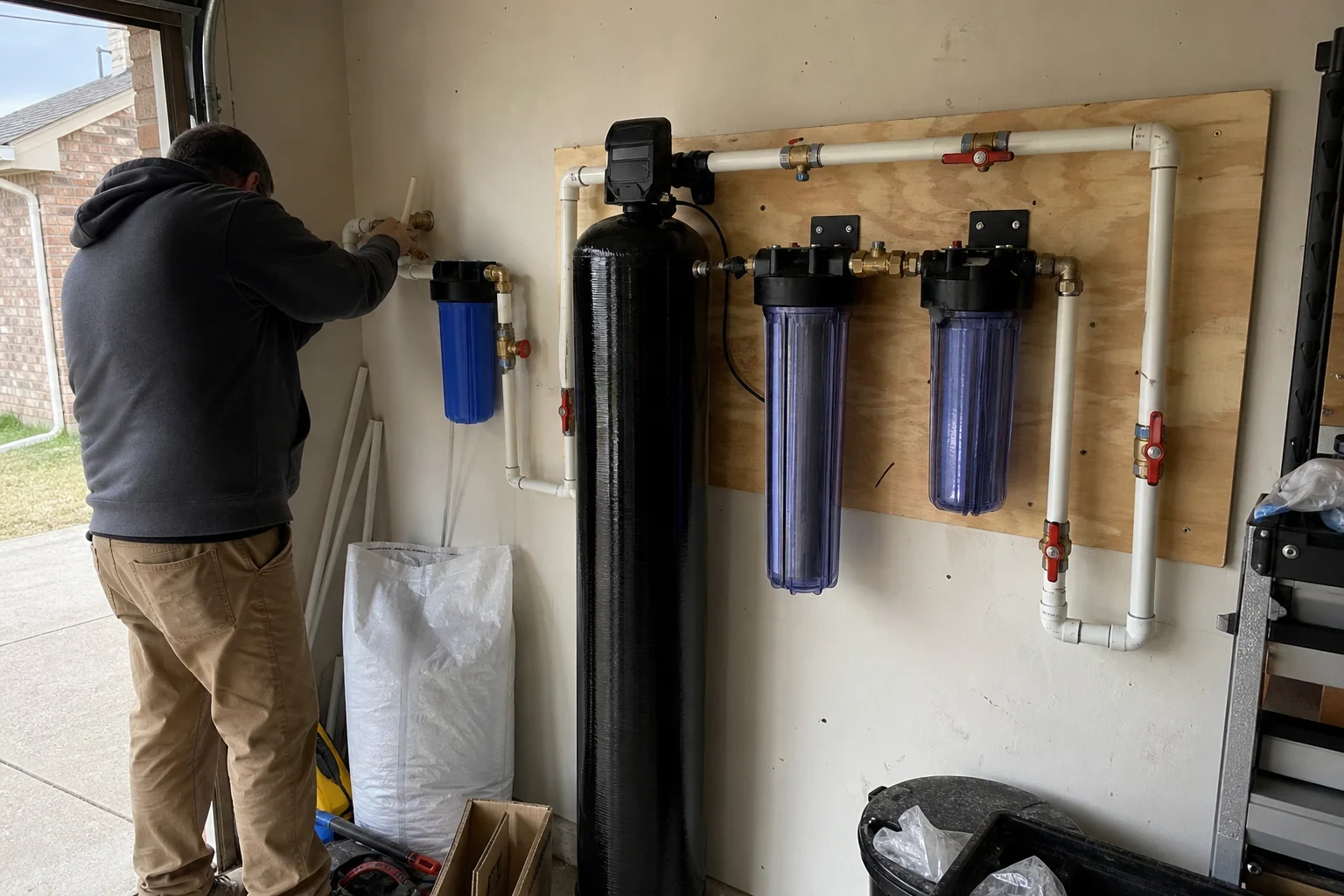
A carbon system on your main water line that treats every tap in the house, sized to your flow rate and installed by the same people who tested your water.
Water Softeners
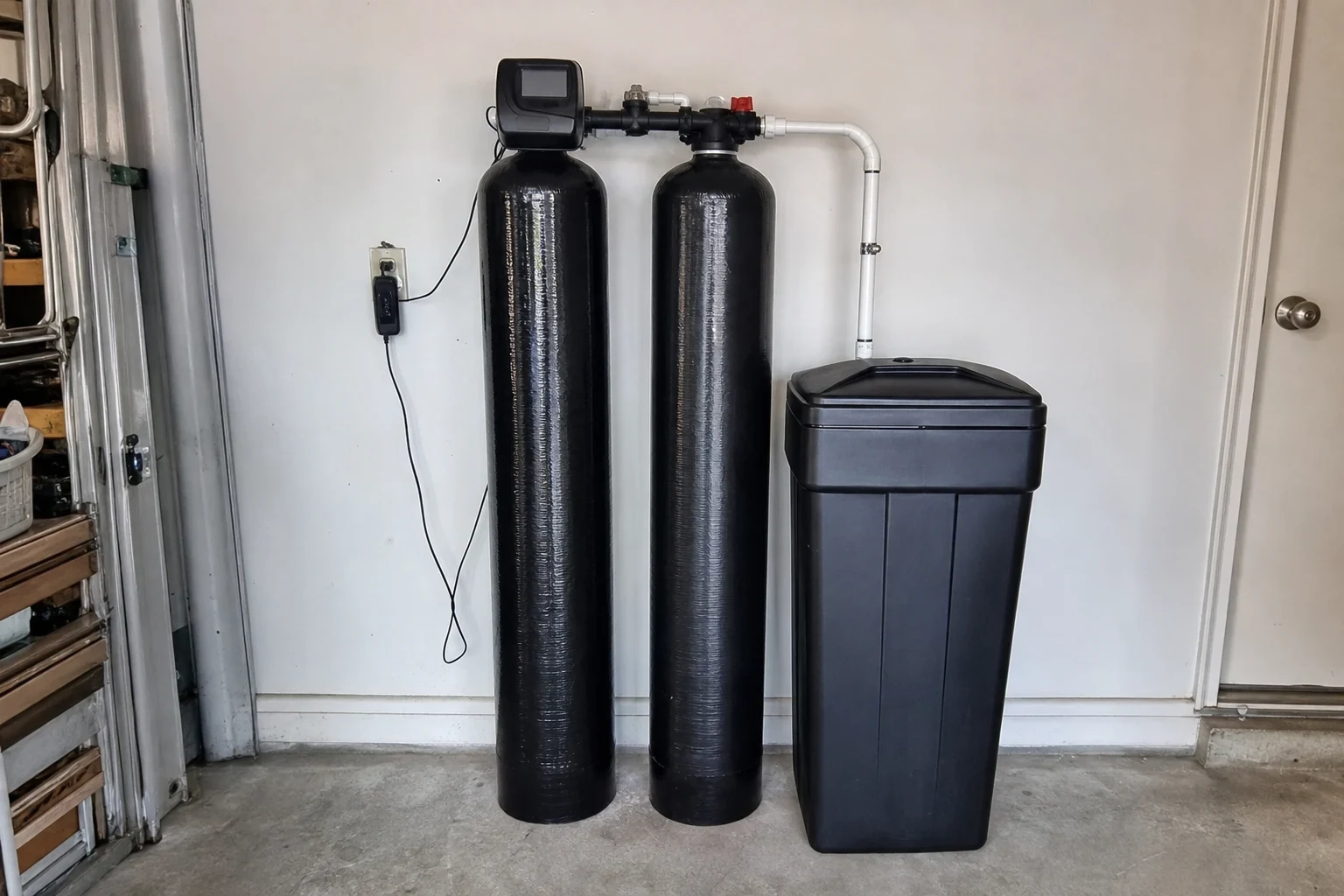
Ion-exchange softeners sized from your actual hardness reading and household use, with the valve programmed and the drain line set before we leave.
Reverse Osmosis
A multi-stage under-sink system that strips dissolved solids, chlorine taste and trace metals from the water you drink and cook with.
UV Water Treatment
A UV chamber on your main line that disables bacteria and viruses without chemicals, sized to your flow and paired with the right prefilter.
Why a Small Crew Does Better Work
Most filtration problems we're called to fix trace back to a handoff: a salesperson who never saw the plumbing, an installer who never saw the test. We keep the same few people on your job so nothing gets lost between visits.
One set of eyes on your water
The person who reads your water test is the one who picks the media and sizes the tank. That matters because a carbon bed sized for flow rate and a softener sized for grains of hardness come from the same numbers, and those numbers stay with one person.
We look at the plumbing first
Before quoting, we find where your main line enters, check whether there's a softener loop in the garage, and note where a drain and outlet are. A quote written without that walk-through tends to grow on install day.
Parts named, not hidden
Your quote lists the tank, valve head, media, bypass valve and fittings by name. You'll know what you're paying for and what will need replacing later.
An honest no
If your hardness is low enough that a softener won't change much, we'll say so. Plenty of homes only need a carbon system or a single reverse osmosis unit at the kitchen sink.
We come back to the same house
When it's time for a cartridge, a resin cleaning or a UV lamp swap, you talk to people who already know your setup.
About Water Filtration Allen
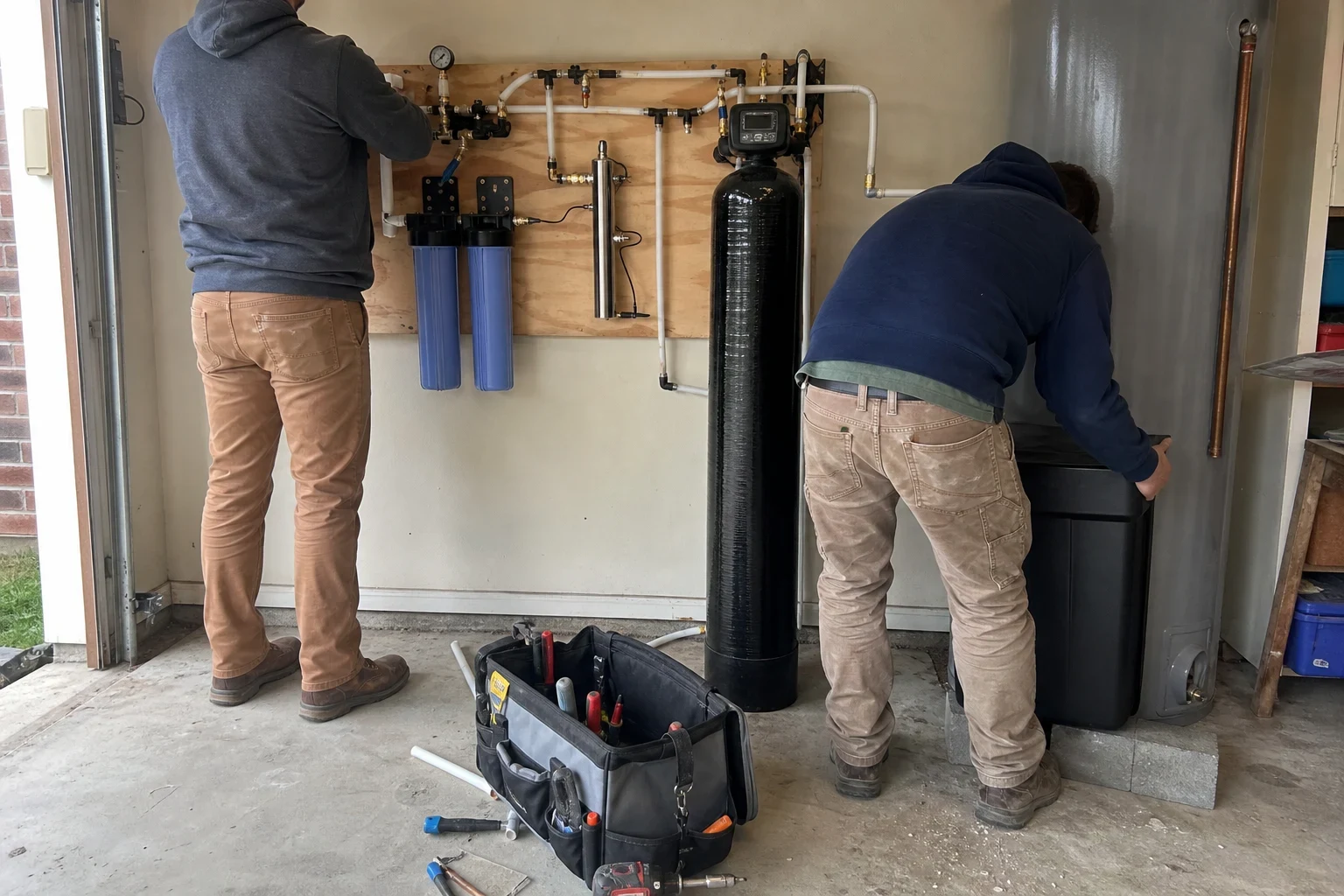
We're a small water filtration company that works in homes around Allen. We chose to stay small on purpose. When one crew tests, plans and installs, the system that goes into your garage is the one that was designed for your water, not a stock package pulled from a truck.
We'd rather spend time explaining why a valve head goes on a certain side or why your RO faucet needs an air gap than rush to the next appointment. You can read more about how we work on our About page, or see each system in detail on its own service page.
What Sets the Cost of a System
A few particular details decide what a system costs, so we won't price one by phone before seeing your water and plumbing. These are the things we check, so your quote is easy to follow.
Once we've looked at your water and plumbing, you get a written quote broken out line by line, with nothing guessed at. Standard professional installation is included for qualifying homes, and we'll let you know early on if yours qualifies.
- Which systems, and how many
- One under-sink reverse osmosis unit is less work than a whole-home carbon tank combined with a softener. Each added system brings more equipment and plumbing, though combined systems can often share fittings and a bypass.
- Home size and water flow
- The tank is sized to peak flow. Four bathrooms in use at the same time call for more media than two, or pressure sags when a shower and the dishwasher run together.
- Type of media
- Ordinary granular carbon does a good job on chlorine. When your water is treated with chloramine, catalytic carbon performs better at a higher price, and we'll walk you through that choice.
- Main line location
- A garage with a loop already plumbed in is the simplest job. Labor rises when we have to cut the main line, reroute pipe or squeeze into a cramped closet.
- Drain and electrical
- Softeners and RO units send backwash or reject water to a drain, and a UV unit needs an outlet close by. If either is missing, adding it goes on the quote.
- Replacement parts
- Cartridges, membranes, salt and UV lamps each get replaced on a schedule. We spell those out so you know what the system costs to own, beyond the day it goes in.
Where We Work
We install and service systems in Allen and the towns around it, including Plano, Fairview, Lucas, Parker, Frisco, McKinney, Richardson, Murphy, Wylie and The Colony. Because the same crew handles every job, we keep our area to places we can reach without rushing.
- Allen
- Plano
- Fairview
- Lucas
- Parker
- Frisco
- McKinney
- Richardson
- Murphy
- Wylie
- The Colony
If you're close to these towns but not sure you're covered, ask when you call and we'll give you a straight answer. Our Service Areas page lists more detail.
What Homeowners Ask Us
Something not covered here? (972) 945-9687
Is a water softener actually necessary?
It depends on your numbers. A softener pays off when hardness runs high enough to scale fixtures, glassware and the elements in your water heater. The water test measures your hardness, and we suggest a softener only when that reading calls for one. In some homes, carbon filtration by itself is the better answer.
How does the water test work?
We take a sample from one of your taps and measure hardness, chlorine, pH and total dissolved solids. Then we go over a written water report with you, reading by reading, and explain what each one means for your pipes and the water you drink. You keep the report even if you buy nothing, and we'll describe the visit when you call.
How is whole-home filtration different from reverse osmosis?
Whole-home filtration runs every gallon coming into the house through carbon media, so the disinfectant taste and smell are gone from showers, laundry and all your taps. Reverse osmosis pushes water through a very fine membrane at a single sink and strips out much more dissolved material, which makes it the choice for drinking and cooking. Plenty of homes use both.
Does a filter reduce water pressure?
Not if it's sized right. A pressure drop you can notice usually means the tank is too small or the sediment cartridge is clogged. We match the tank to your home's peak flow and show you when the pre-filter is due.
Who needs UV water treatment?
A UV unit sends water through a chamber past a lamp that inactivates bacteria and other microorganisms, giving you a chemical-free barrier. The water has to be clear for it to work, so it goes in after filtration. Most lamps get swapped once a year, with the quartz sleeve cleaned during the same visit.
When do filters and parts get replaced?
That comes down to the equipment and how much water you use. Sediment cartridges tend to need changing every few months, RO membranes go longer, and whole-home carbon media outlasts both. Your quote includes the schedule for the exact system you're getting.
How much time does an install take?
One reverse osmosis unit under the sink is usually a quick visit. A whole-home carbon tank plus a softener takes more time, since we cut into the main line, build a bypass loop and flush both tanks before your water comes back on. Your quote shows the expected time, and the same crew stays until everything is checked and the space is clean.
How a Job Runs
Four steps, with the same people at each one.
- 1
Your phone call
Tell us what's bothering you: taste, spotting on glass, scale in the kettle, or just wanting cleaner drinking water. We set a time to come out.
- 2
Water test and report
We test your water at your home and walk you through the water report: hardness, chlorine level, pH and anything else that stands out. Then we look at where the main line and drains are.
- 3
Written quote
You get a line-item quote naming each part and the reason for it. If the numbers say you don't need a piece of equipment, it isn't on there.
- 4
Install and walkthrough
We put down floor protection, install the system with a bypass valve so water can be routed around it for service, flush the media, and check for leaks at every joint. Before we leave, we show you the bypass, the filter housings and when each part is due.
Learn What Your Water Really Calls For
It begins with a water test in your home and a plain walk through the results. After that, it's your call whether any system is worth adding.