ServicesReverse Osmosis
Reverse Osmosis in Allen, Fitted Under Your Kitchen Sink
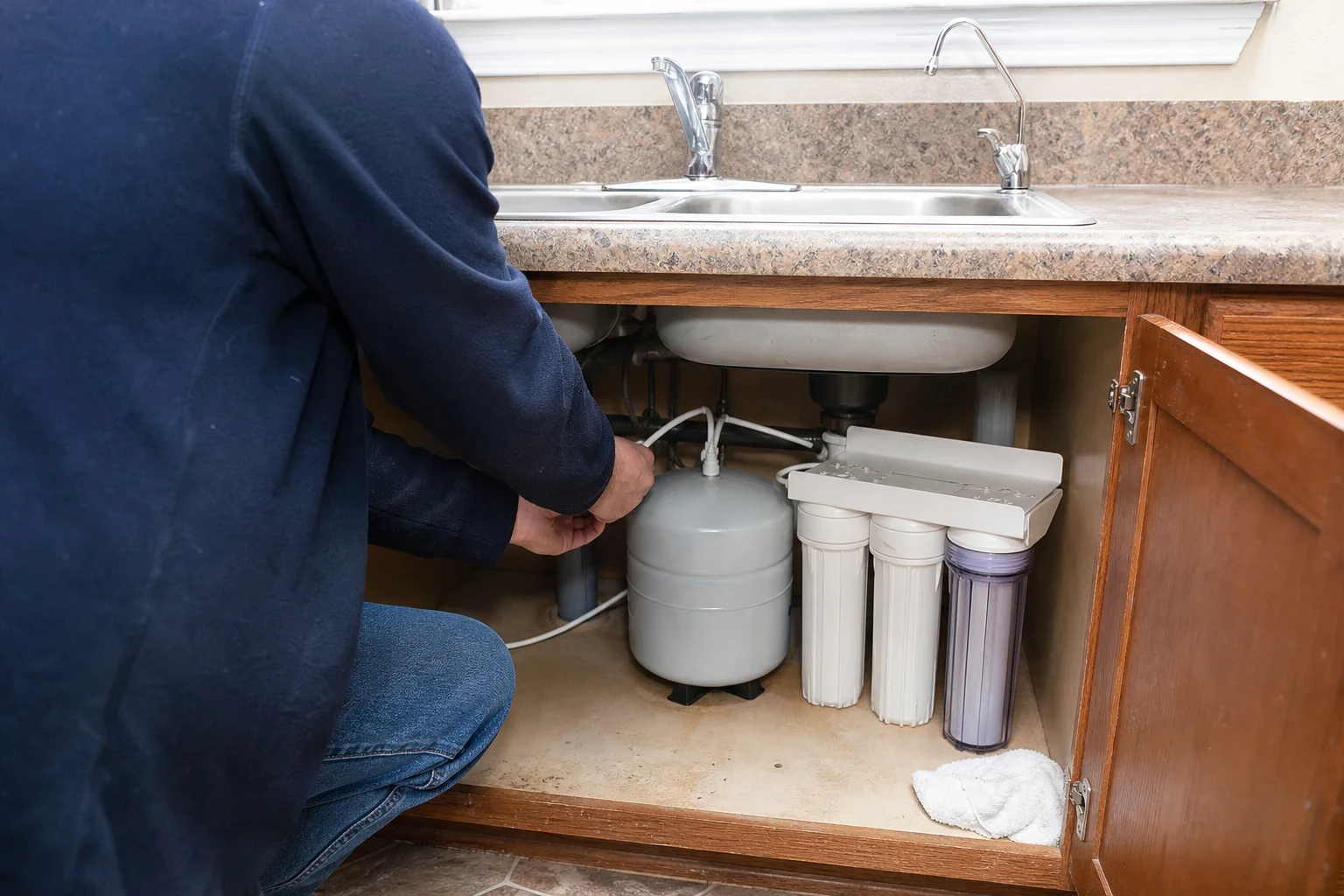
We install under-sink reverse osmosis systems that push your drinking water through a fine membrane, removing chlorine taste, dissolved solids and trace metals. The same small crew checks your water, plans the setup and does the install, so you deal with the same people throughout.
What Reverse Osmosis Does and When It Fits
Reverse osmosis uses your line pressure to drive water across a thin-film composite membrane. Its openings are so fine that dissolved salts, metals like lead and most of the compounds behind off-tasting tap water stay on the feed side. The purified water, called permeate, collects in a small pressurized tank, while the reject stream flushes the leftovers to your drain.
It is a point-of-use system. It treats the water at one faucet, usually the kitchen, plus a refrigerator or ice maker line if you want one. If your concern is chlorine smell in the shower or laundry, whole-home filtration is the better tool, and we will tell you that on the first visit rather than sell you the wrong box.
Our crew is small on purpose. The person who reads your water is the person who drills the faucet hole and checks the system after it runs, so nothing gets lost between a salesperson and an installer.
What Goes Into an Install
- 01
Sediment prefilter
A polypropylene cartridge, typically rated around 5 microns, catches sand, rust flakes and pipe debris before they can foul the membrane.
- 02
Carbon block prefilter
Carbon removes chlorine and chloramine. This stage matters because those disinfectants slowly break down a thin-film membrane if they reach it.
- 03
Membrane and storage tank
We size the membrane output to how much water your household drinks and cooks with. The tank has an air bladder, and we check its precharge before filling so you get steady flow at the faucet.
- 04
Dedicated faucet and drain connection
We mount a separate faucet at the sink, tie the feed into your cold line with a shutoff, and fit a drain saddle above the trap so reject water leaves cleanly.
- 05
Post filter and optional remineralization
A final carbon polish takes out any taste picked up in the tank. If you find pure RO water tastes flat, a remineralization cartridge adds back a little calcium and magnesium.
- 06
Refrigerator or ice maker line
If you want filtered ice and door water, we run tubing from the system to the fridge and pressure-test the connection.
Questions about Reverse Osmosis?
Call(972) 945-9687Signs Reverse Osmosis Is Worth a Look
You buy cases of bottled water
If nobody in the house drinks from the tap, an RO faucet gives you bottled-quality water without the plastic or the trips to the store.
Chlorine taste in coffee and tea
Disinfectant flavor comes through clearly in hot drinks. The carbon stages remove it before water ever reaches your cup.
Older plumbing and lead questions
Homes plumbed before the 1986 federal ban on lead solder can still have it on copper joints. RO membranes are effective at reducing lead at the drinking tap.
Cloudy or odd-tasting ice
Dissolved minerals and gases show up in ice cubes first. Feeding the ice maker from RO usually clears that up.
High dissolved solids reading
A TDS meter reading we take during your water test tells us how much is dissolved in your water and how much difference a membrane will make.
How the Job Runs
- 1
Water test and sink check
We test your tap water, measure your line pressure and look under the sink. Pressure matters, because a membrane below roughly 40 psi produces water slowly and may need a booster or permeate pump.
- 2
A written plan
You get the system, stages, faucet location and any fridge line spelled out before we schedule. Nothing is added on install day without your say.
- 3
Installation
We protect the cabinet floor, mount the filter housings and tank, drill or use an existing countertop hole for the faucet, and make the feed and drain connections. Most kitchens take a few hours.
- 4
Flush, test and walk-through
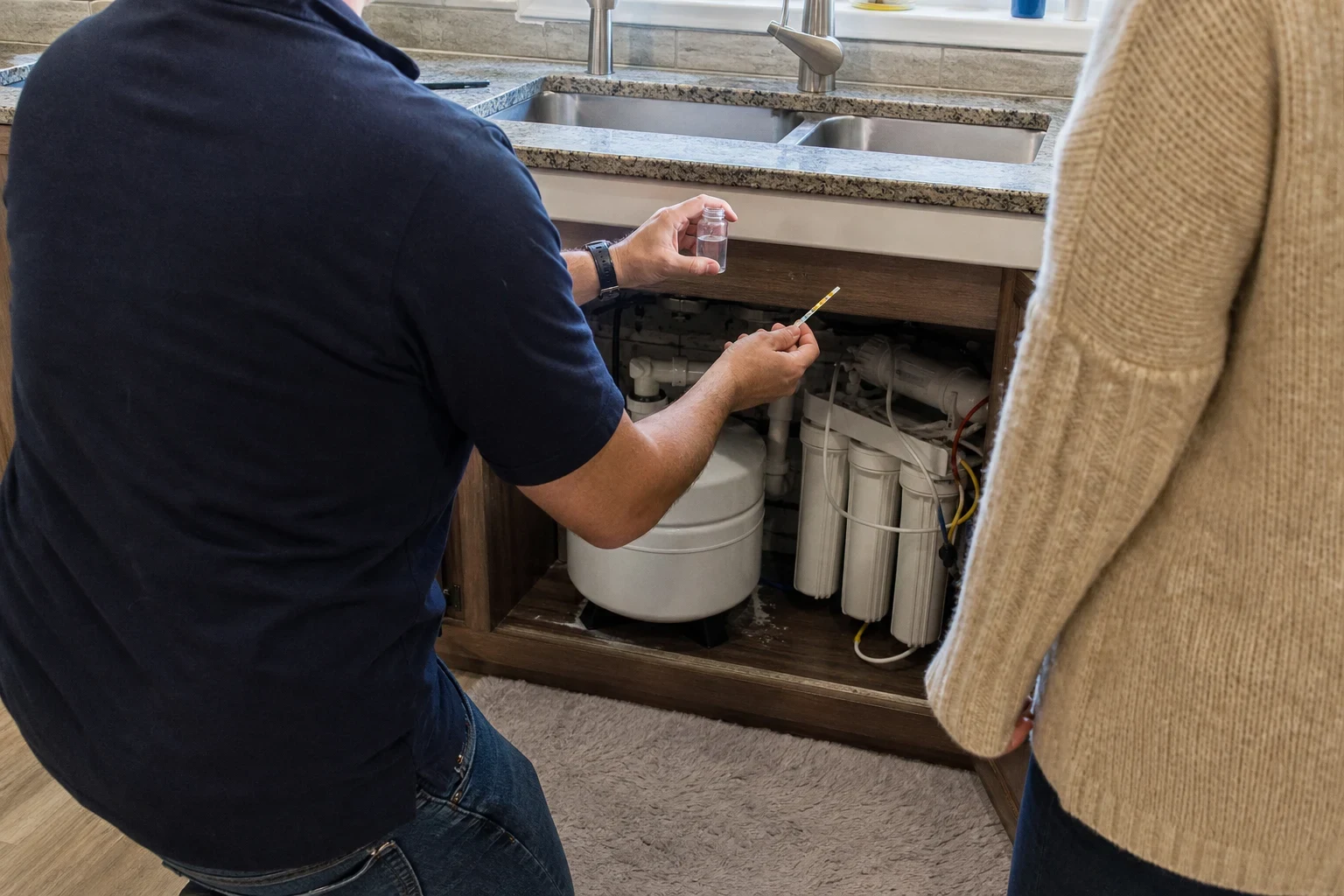
We flush the carbon and membrane and inspect every fitting for drips. Then we meter the dissolved solids at your regular tap and again at the RO faucet, so the difference is right there on the screen. Before we leave, we show you how to swap the filters and when they are due.
What Moves the Price
An RO system is a fairly contained job, but no two kitchens are laid out the same. We give you a quote by phone once we know your setup, and a written one after we see the sink. These are the things that change it.
- Number of stages
- A basic four-stage unit costs less than one with remineralization or an extra carbon stage. We match the stages to what your water test shows.
- Countertop material
- Drilling a faucet hole in laminate is quick. Quartz and granite take a diamond bit and more time, and an existing sprayer hole can sometimes be reused.
- Fridge or ice maker run
- A longer tubing run across the kitchen or through a cabinet adds parts and labor.
- Water pressure
- Low line pressure may call for a permeate pump or booster pump to keep production and tank fill steady.
- Space under the sink
- A garbage disposal, a deep basin or tight plumbing can mean a compact tank or a different mounting position.
Reverse Osmosis Questions
Does reverse osmosis waste a lot of water?
Part of the incoming flow always goes down the drain, because that stream is what carries rejected minerals off the membrane surface. The ratio of drain water to drinking water depends on the membrane design and your line pressure. A permeate pump can cut the reject volume noticeably, and we can talk through whether it makes sense for your home.
Will the water taste flat?
Some people notice that very low mineral water tastes plain. A remineralization cartridge after the membrane adds a small amount of calcium and magnesium back, and it is easy to add later if you change your mind.
How often do the filters need changing?
Prefilters and the post filter are typically replaced every six to twelve months, depending on use. The membrane usually lasts two to three years. A rising TDS reading at the RO faucet is the clearest sign the membrane is due.
Do I need a softener before an RO system?
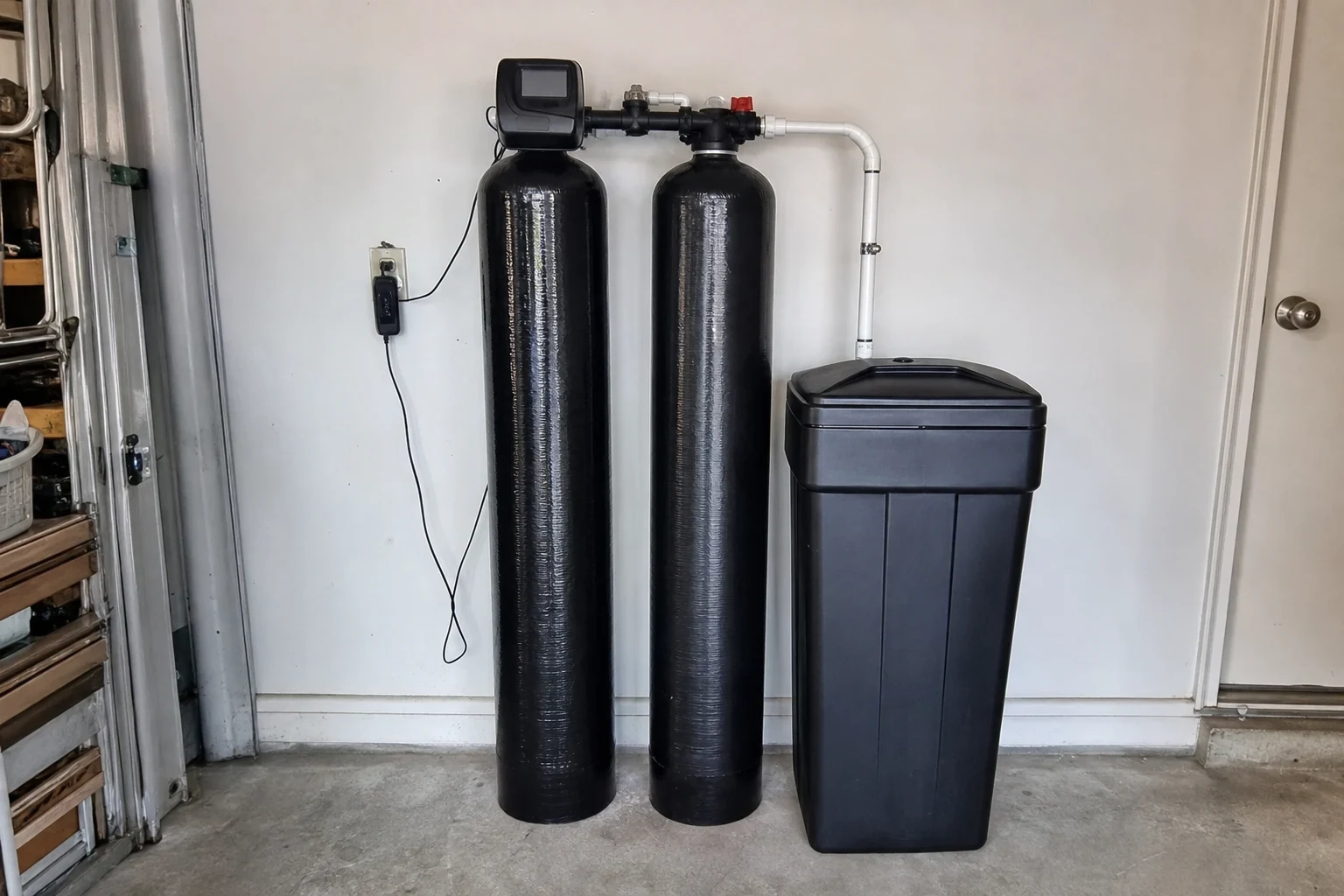
Not always. Hard water can scale a membrane faster, so we look at your hardness reading during the water test. If it is high, we may suggest one of our water softeners, but plenty of homes run RO without one.
Does RO kill bacteria?
The membrane blocks most bacteria, but it is not designed as a disinfection system. If microbial safety is the concern, UV water treatment is the right tool, and the two can work together.
See What Your Kitchen Tap Could Be
Give us a rough picture of your kitchen layout and what you would change about your drinking water. The crew member on the phone is the one who tests your water and handles the install.